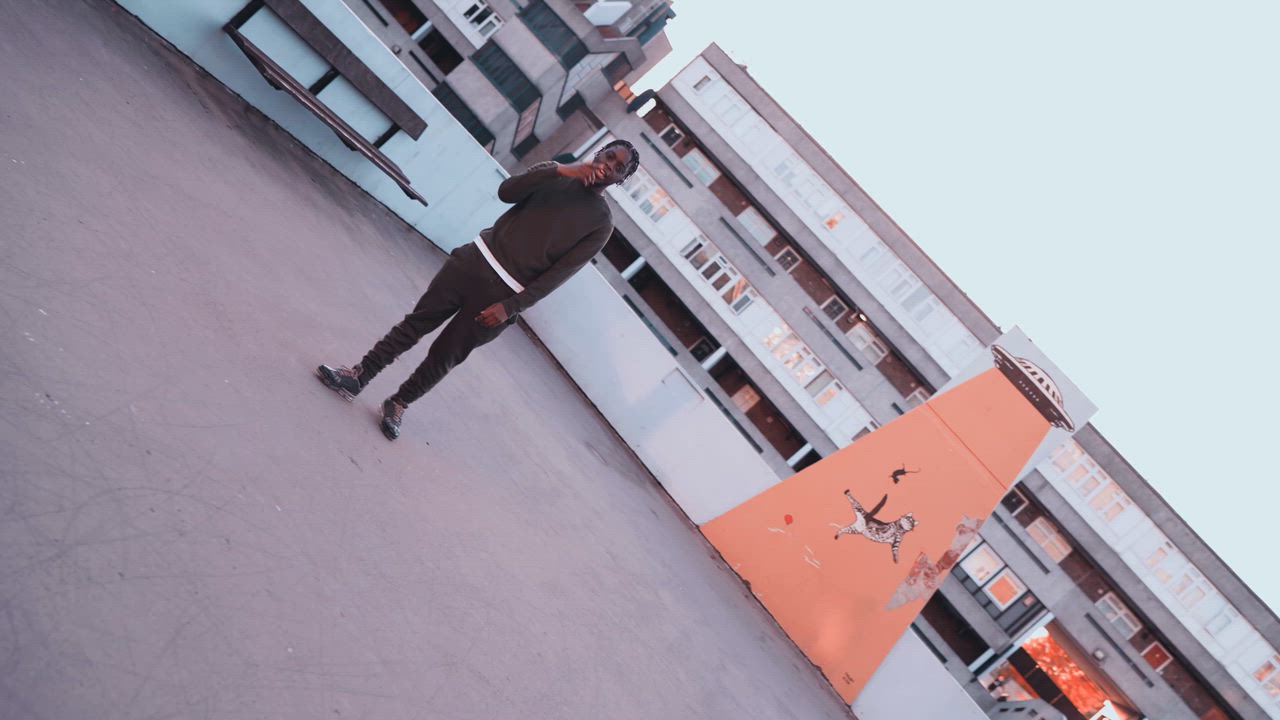
Yes, a UK music video can include drone shots, as long as the person flying follows the Civil Aviation Authority’s Drone Code and the location allows it. For a camera drone of 100g or more, the person flying needs a Flyer ID and whoever is responsible for the drone needs an Operator ID. The drone has to stay below 120m, keep its distance from people who aren’t involved and never fly over crowds.
This guide sets out the rules so you know what is involved and what to ask your production company. It isn’t a guide to flying a drone yourself on a shoot.
The two IDs
The CAA sets out who needs which ID:
- Flyer ID. Anyone who flies a drone or model aircraft that weighs 100g or more.
- Operator ID. Whoever owns or is responsible for a drone that weighs 250g or more, or 100g or more with a camera. The Operator ID must be shown on the drone, and you have to be 18 or over to get one.
A drone used for filming has a camera, so the Operator ID threshold for it is 100g.
New drones from 2026
New drone models placed on the UK market from 1 January 2026 must carry a UK class mark, from UK0 to UK6. The class affects where and how close to people a drone can fly.
A drone bought before 2026 is unlikely to have a UK class mark. It can still fly under the rules for its weight. A drone with a European C class mark can be flown as the matching UK class until 31 December 2027, so a C0 drone flies as a UK0.
Height and distance
The CAA’s rules on where you can fly cover the points below.
Stay below 120m
Fly below 120m (400ft). The drone must never be more than 120m from the closest point of the earth’s surface, so take care over hills and near cliffs.
Keep 50m from people
Keep a minimum horizontal distance of 50m between the drone and people, including people in buildings and vehicles. The drone must not fly over anyone in that zone, even above 50m. You can fly closer to people who are with you and involved in what you’re doing. If the drone flies higher than 50m, it should keep the same distance horizontally, so at 80m high it stays 80m away.
Lighter drones have more freedom. A drone below 250g, or in the UK0, UK1 or C0 class, can fly closer than 50m to uninvolved people and can fly over them. From 1 January 2026 until 31 December 2027, the same applies to C1 class drones.
The Drone Code covers the Over People (A1) and Far from People (A3) sub-categories. Flying a UK2 class drone in the Near People (A2) sub-category needs an A2 Certificate of Competence. The drone can then come within 30m of uninvolved people, or 5m in low-speed mode, but not fly over them.
Keep away from built-up areas
Keep at least 150m away from residential, recreational, commercial and industrial areas. Drones below 250g and UK0, UK1 and C0 class drones are exempt, and so are C1 class drones until the end of 2027. Many music video locations are in these kinds of areas, so the size of the drone matters.
Never fly over crowds
Never fly over people who are crowded together, whatever the size of the drone. The CAA’s examples of where crowds gather include shopping areas, sports events, religious gatherings, music festivals and concerts, and crowded beaches or parks. Bear this in mind if your video includes an outdoor worship night, a street performance or a large group of extras with members of the public nearby.
Airports and restricted airspace
Most airports and airfields have a Flight Restriction Zone around them. Never fly in one unless you have permission from the airport, airfield or spaceport.
The CAA warns that the airspace details in a drone’s own software may not always be up to date. Before flying, check a correct and up-to-date source, such as the NATS airspace map. Flying may also be restricted around sites such as prisons, royal palaces and government buildings, and during some events.
Anything outside the Drone Code needs the right authorisation from the CAA before flying.
Location rules still apply
The Drone Code covers how a drone flies. You also need permission from whoever owns or manages the place.
- The Royal Parks. All commercial filming needs permission from their filming team. Their drone policy says they may give written permission for commercial drone use in some circumstances. Applications need a CAA licence, a risk assessment and method statement, a flight plan and the drone’s specifications. The central London parks are in restricted airspace, so extra approval is needed. Allow at least 10 working days, and expect a drone fee on top of the filming fee. Permission isn’t guaranteed.
- Private land. Get the owner’s consent before anyone flies over or from their property.
- Streets and other public places. Check the borough’s film service and the Drone Code distances above. Filming a music video in London covers the wider permission rules.
What to ask your production company
If you want aerial shots, ask:
- Who will fly the drone, and do they hold a Flyer ID and an Operator ID?
- How heavy is the drone, and which class is it?
- Can the shot you want be done within the Drone Code at your location?
- Does the location need its own permission, and who will apply?
- Does their insurance cover drone flying?
- What happens if the weather stops the drone flying on the day?
Booking drone shots with Aligned Vision
For aerial shots, Aligned Vision brings in a drone contractor. If you want 4K, 120fps slow motion or drone aerials, mention them on the discovery call and we’ll confirm the kit for your shoot (help centre). Put drone shots in your plan early too. How to write a music video treatment shows where special requests fit.
See the music videos page for what the Signature package includes, then get in touch to talk about your shoot.